QuitNicPouches

Craving control

Manage Nicotine Pouch Cravings Before They Control You

Prepare a short response before a craving arrives: delay the decision, change context, use a replacement, and record what happened.

Evidence note: Some sources cover nicotine or smoking, not nicotine pouches. We use them only as indirect context. This page is educational. It does not diagnose or treat a medical condition. Ask a qualified clinician about personal health questions.

QuitNicPouches lets you rate an urge, record its trigger, run a short Craving-SOS step, and save the result for later review. It does not diagnose dependence or replace cessation care.

Evidence-aware answer: cravings often rise and fall in waves, but their duration and intensity vary. Behavioral coping steps can help you delay and review an urge; medication questions should be discussed with a qualified clinician or quitline.

Where QuitNicPouches fits: the app records craving context and the response you tried. It does not predict which technique or medication will work for you.

Need product instructions? Read the Craving-SOS help page for the exact in-app process. This page explains general craving support and evidence limits.

iPhone app. Craving-SOS and safety support are available for high-risk moments.

Log triggers in seconds Match cravings to practical replacements See high-risk times before they repeat
Direct action

What can you do when a nicotine pouch craving starts?

  1. Delay the decision

    Set a short pause. Treat the timer as a support step, not as a promise about how long the urge will last.

  2. Change the context

    Stand up, move to another place, drink water, or start a short task that does not include the usual pouch routine.

  3. Use one prepared replacement

    Choose a simple mouth, hand, movement, breathing, or support action that is safe for you.

  4. Record what happened

    Note the trigger, response, and outcome. Use the record to prepare for the next similar situation.

Product demo

Using the Craving Tracker

Log triggers and use short replacement prompts to interrupt the usual response.

  • One-tap logging and replacement prompts.
  • Progress charts that visually reinforce your effort.
  • Tools tailored to your specific triggers.
See the tracker
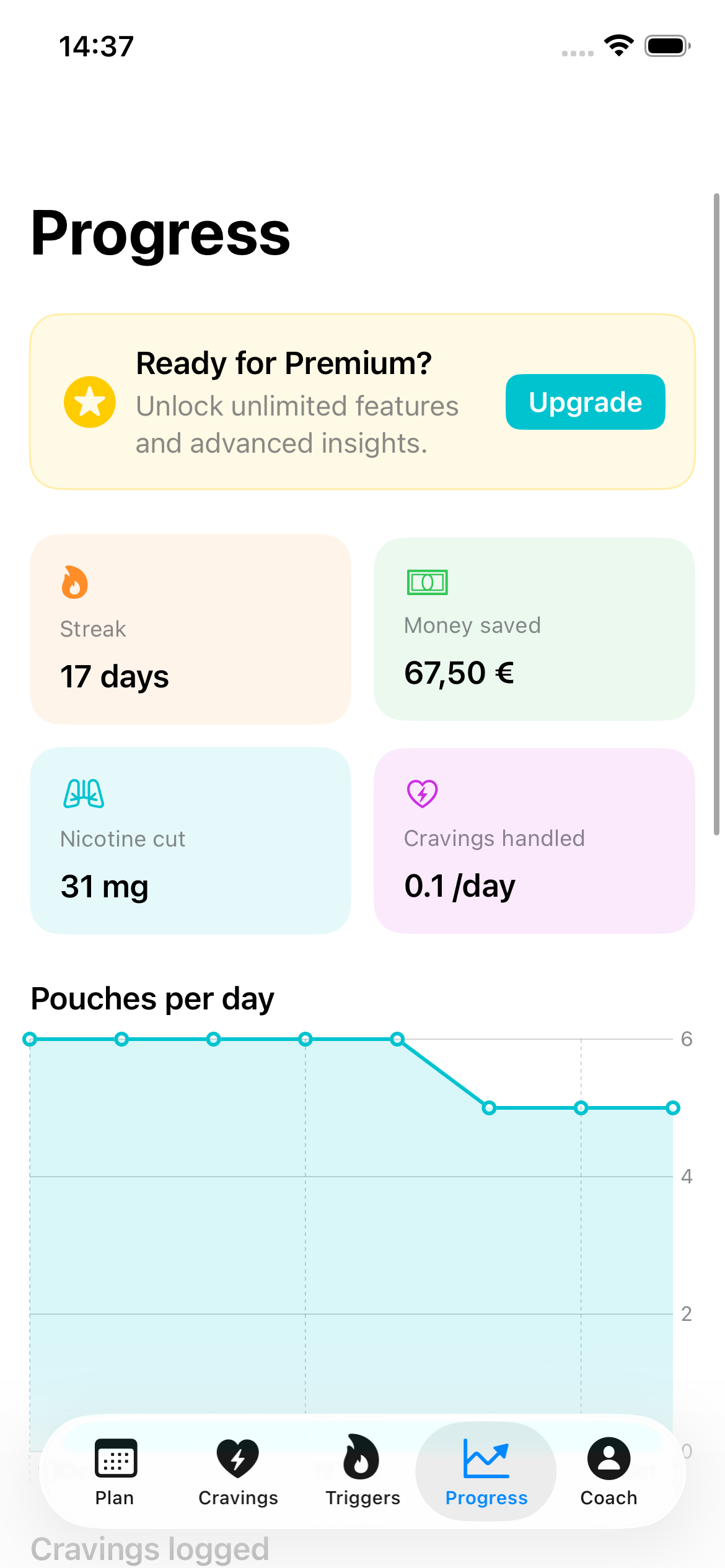
QuitNicPouches craving dashboard showing triggers, coping prompts, and streak progress.
Visual dashboards turn cravings into actionable insights and wins.

App support

Craving Patterns Worth Watching

Use tracking to understand when urges tend to appear and which responses help you stay on plan.

Pain points

Why Cravings Are Hard (And How to Beat Them)

Cravings can be linked to withdrawal and to recurring situations. Identifying those triggers can make them easier to plan for.[1]

Routine cues can trigger cravings

Coffee, driving, meals, stress, and social situations are trigger examples in smoking and other tobacco cessation guidance. That evidence is indirect for nicotine pouches, but it supports planning a different response for recurring situations. Logging time and context can help you review your own patterns.[1]

Cravings feel endless

Public-health cessation guidance describes cravings as temporary waves, but no duration fits every person or every nicotine product. Use a timer as a coping aid, not as a promise that an urge will end at a specific minute.[3]

Motivation dips at night

Introduce evening routines, accountability check-ins, and substitute rituals that make late cravings manageable.

Solution

The QuitNicPouches Craving Toolkit

Trigger tagging & review

Log time, place, mood, and intensity, then review repeated contexts before planning your next response.

Replacement library

Choose from guided breathing, movement, hydration, or sensory swaps that are commonly used to calm the urge.[4]

Accountability loops

Share streaks with friends or a coach so support arrives the moment you need it.

Insights dashboard

Review which responses you used and how the recorded urge changed. Adjust your plan for difficult times of day.

How it works

Four steps to turn cravings into progress

For a Zyn-specific daily plan, use the guide to stop using Zyn pouches and manage cravings daily.

  1. Record a craving

    Open QuitNicPouches, rate the intensity, and note the situation when that detail is useful.

  2. Apply a replacement

    Use one prepared support step, such as water, movement, breathing, or a suitable mouth replacement.

  3. Reflect and reward

    When the craving passes, log how you felt and reward yourself with a micro win.

  4. Review weekly insights

    Spot your most vulnerable windows and adjust your taper or routines accordingly.

App workflow

What Craving-SOS actually does

Craving support is built around short, concrete steps that are saved for later review.

Rate the urge

Set intensity from 1 to 10 and optionally capture the trigger driving the moment.

Run an intervention

Use a timed breathing, delay, movement, water, mouth-swap, journaling, values, buddy, or custom step.

Save the result

Log the outcome, try a second intervention if needed, or open slip recovery without shame.

FAQ

Frequently Asked Questions

How long does a craving usually last?

Cravings often rise and fall in waves, but there is no reliable duration for every person or every urge. Delay the decision, change context, use a prepared coping step, and seek professional support if cravings feel unmanageable.

What if cravings hit late at night?

Prep a bedtime routine—hydrate, journal, or message your accountability partner. Log the craving to relieve mental pressure.

Can I use NRT for cravings?

Nicotine-replacement therapy is evidence-based for smoking cessation, but that evidence should not be presented as a pouch-specific prescription. Ask a qualified clinician or quitline whether NRT or another cessation medication is appropriate for you.[4]

Where do I find more support?

Explore the full quit guide and the withdrawal timeline to predict future challenges.

Sources and evidence limits

These references support the general nicotine-cessation context on this page. Nicotine-pouch-specific evidence remains limited, so the links do not establish a guaranteed outcome or a personal treatment plan.

  1. NCI: nicotine withdrawal and triggers — general tobacco-cessation guidance on routine, emotional, social, and withdrawal triggers; indirect for nicotine pouches.
  2. Smokefree.gov: nicotine replacement therapy — smoking-cessation guidance that should be discussed with a clinician or quitline when relevant.
  3. NHS: managing nicotine withdrawal symptoms — general withdrawal timing and support context.
  4. NICE: tobacco cessation support and treatment — professional support and treatment-choice context.

Turn every craving into information

Use QuitNicPouches to record the trigger, response, and outcome so the next decision is easier to prepare.

Start logging cravings

return to the quit guide

📱 Scan to Download

QR code to download QuitNicPouches app from App Store

Scan with your phone camera to download QuitNicPouches