Fear of the unknown
Not knowing when cravings peak creates anxiety. The timeline spells out each milestone in advance.
QuitNicPouches
Withdrawal timeline
From Hour 1 to Week 4: see common withdrawal windows, what may change over time, and what to do at each stage without treating one timeline as a prediction.
Evidence note: Some sources cover nicotine or smoking, not nicotine pouches. We use them only as indirect context. This page is educational. It does not diagnose or treat a medical condition. Ask a qualified clinician about personal health questions.
Research note: this timeline uses general nicotine-withdrawal guidance from the National Cancer Institute and the CDC. Both are mainly smoking-focused, while pouch-specific timelines remain limited. Individual timing varies with dose, dependence, and quitting method. See the evidence method.
Short answer
Nicotine withdrawal can begin within hours. For many people, symptoms are strongest during the first few days and become less intense over the next days or weeks. Cravings linked to routines can last longer. Zyn-specific evidence is limited, so use this range to plan support, not to predict your exact recovery.[1]
Editorial review: QuitNicPouches Editorial Team. The team checks public sources and keeps pouch-specific limits visible.
Clinical review: No external clinician has reviewed this page. This content is educational and does not replace medical, dental, or mental-health care.
Last reviewed: . Conflict disclosure: QuitNicPouches owns and promotes the app mentioned on this page.
Use this timeline to separate normal withdrawal waves from the symptoms that need a more specific plan. Use the detailed table below, then open the day-specific guides when you hit that stage.
iPhone app. Craving-SOS and safety support are available before cravings peak.
Detailed timeline
Use this day-by-day table to plan support windows. Timing varies, so treat each stage as preparation guidance, not a personal forecast.
| Stage | What you may notice | Next step |
|---|---|---|
| Hour 1 | Habit urges after meals, driving, work breaks, or stress cues. | Delay the automatic pouch and log the trigger. |
| Day 1 | Irritability, restlessness, headache, and stronger routine cravings. | Hydrate, use short walks, and keep replacements visible. |
| Day 2 | Cravings may intensify as nicotine levels keep dropping. | Use timed craving blocks and avoid high-risk routines. |
| Day 3 | Cravings, brain fog, low mood, or sleep disruption may feel especially strong. | Schedule extra support and reduce decisions. |
| Day 4-7 | Some physical symptoms may begin easing, while trigger-based urges remain. | Review your trigger log and protect the next meal or commute. |
| Day 7 | The first week is complete, but familiar routines can still bring short cravings. | Review what worked and plan for your highest-risk routine. |
| Week 2 | Sleep, focus, and energy may start feeling more stable. | Set a new reward and plan for surprise cravings. |
| Day 30 | Physical symptoms may be quieter, while occasional cue-based cravings can still occur. | Keep the habits that protect your quit plan and note any persistent symptoms. |
See exactly what day 3 feels like, what usually changes on day 4, read the Zyn withdrawal symptoms guide, or start with a taper schedule.
Next step
The step-by-step quit guide helps you choose cold turkey or tapering, prepare for cravings, and recover from slips. If you use another pouch brand, use the matching guide so the same plan fits your routine.
Are you experiencing specific side effects? Get targeted relief guides for the most common issues:
Product demo
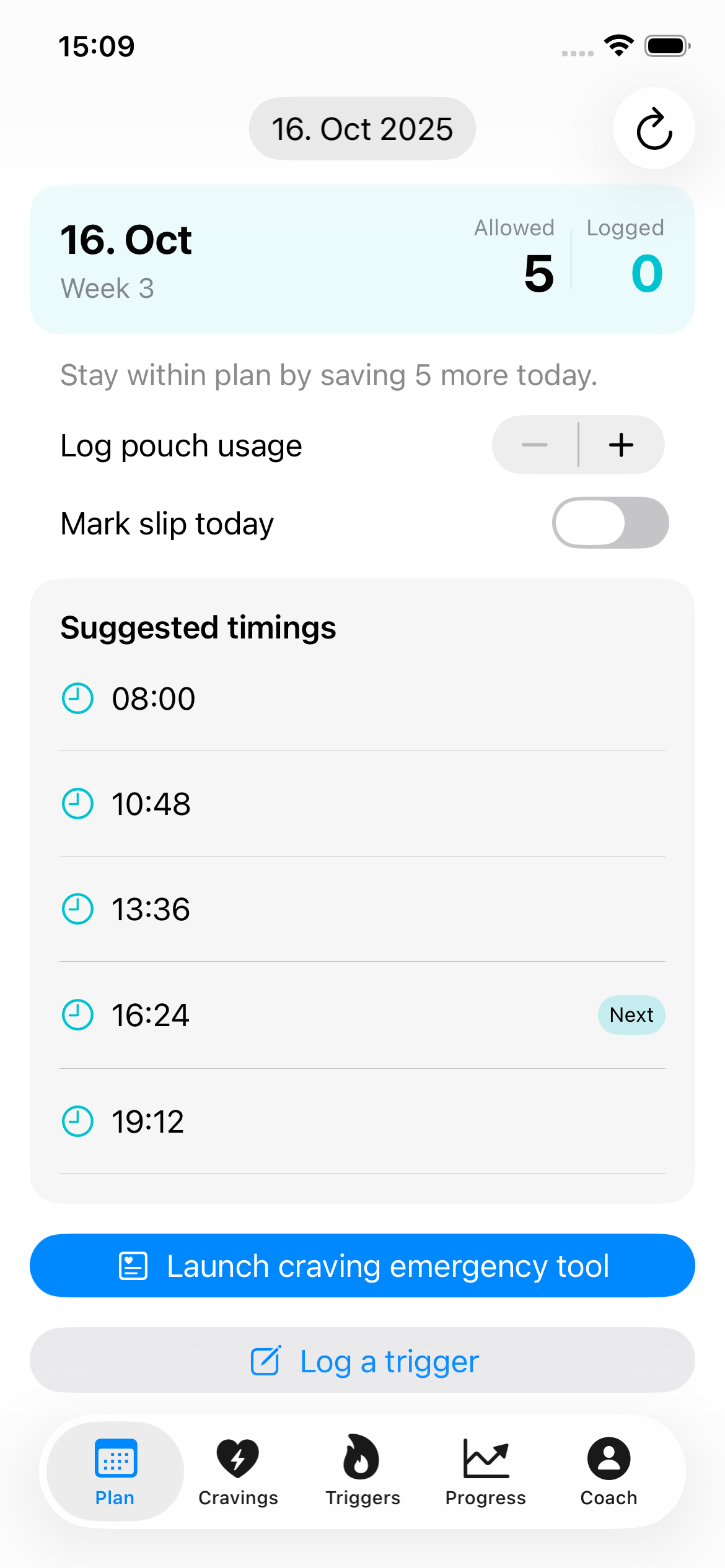
Our in-app chart outlines symptoms and milestones by stage, so you know what is normal and what to do next.
Pain points
Visitors arrive searching “Zyn withdrawal symptoms” and “how long do cravings last.” We answer with empathy, data, and actionable steps.[1]
Not knowing when cravings peak creates anxiety. The timeline spells out each milestone in advance.
Quick wins matter. We highlight money saved, energy boosts, and oral health improvements that show up within days.[3]
Trigger logs and reminders help you prepare for repeated high-risk moments before they catch you off guard.
Solution
Adjust the timeline to your quit date, pouch strength, and taper preferences.
Get specific help for the most searched withdrawal days instead of relying on general advice.
Match targeted coping ideas to headaches, irritability, or sleep disruption.
Automated reminders can prompt hydration, movement, and reflection when cravings are difficult; they do not guarantee that cravings will fade faster.
Track money saved, energy levels, and streaks to reinforce positive change.
How it works
Match the timeline to your own experience and stay ahead of every symptom.
Hydrate, sleep early, and rely on breathwork as adrenaline dips. Light headaches and irritability are normal.[2]
Use the craving logger, chew xylitol gum, and add quick walks to balance restless energy.
Energy returns and sleep stabilises. Celebrate financial and health gains to stay motivated.
Random urges may pop up. Review triggers, schedule rewards, and stay plugged into accountability partners.[4]
App workflow
The timeline content is educational. The app helps you track what is happening and decide what to do next.
Record symptoms, severity, notes, and risk flags, then read cautious non-medical guidance.
Rate an urge, run a short timed intervention, save the outcome, and use slip recovery if the plan breaks.
Track streaks, savings, nicotine reduction, cravings handled, recent history, and Premium long-term patterns.
FAQ
Nicotine withdrawal can begin within hours. For many people, symptoms are strongest during the first few days and become less intense over the next days or weeks. Cravings linked to routines can last longer. Zyn-specific evidence is limited, so use this range to plan support, not to predict your exact recovery.
General nicotine-withdrawal guidance places the strongest symptoms in the first few days for many people. Zyn-specific timing is less certain. Cravings, sleep changes, headaches, and mood changes can peak at different times, so plan for a range instead of one fixed day.
Day 3 can feel difficult because early withdrawal and routine triggers may overlap, but it is not the hardest day for everyone. Sleep, dose, dependence, stress, and quit method can change the pattern. Use extra support across the first week.
Headaches can occur during nicotine withdrawal, but dehydration, poor sleep, caffeine changes, and other causes can also play a role. Drink water, eat regular meals, and rest. Seek medical care for a severe, sudden, or persistent headache.
Prepare a non-nicotine mouth replacement, delay the decision for a short period, change location, and record the trigger. Cravings often pass, but they can return with familiar routines. Ask a clinician or quitline for help when cravings are hard to manage.
Seek professional help for severe or persistent symptoms, major mood changes, thoughts of self-harm, pregnancy, medication questions, or repeated relapse. A clinician, dentist, therapist, or quitline can help you choose safe support for your situation.
These references support the general nicotine-cessation context on this page. Nicotine-pouch-specific evidence remains limited, so the links do not establish a guaranteed outcome or a personal treatment plan.
The QuitNicPouches timeline turns scary unknowns into prepared action items—so you move from cravings to confidence.
Track your withdrawal symptoms📱 Scan to Download

Scan with your phone camera to open the App Store
App support
A clearer timeline makes quitting feel more manageable
Day-by-day guidance
Short actions reduce guesswork when cravings spike.
Symptom-specific support
Jump directly to relief steps for your current stage.
Progress review
Track streaks, symptoms, cravings, savings, and nicotine reduction in one place.