“I’ll forget my limits”
Daily reminders and automatic recalculations keep targets front and centre.
QuitNicPouches
Tapering schedule
A gradual reduction plan can give you clear steps. Withdrawal and cravings vary, so use the plan as a worksheet, not as a clinical schedule.
Evidence note: Some sources cover nicotine or smoking, not nicotine pouches. We use them only as indirect context. This page is educational. It does not diagnose or treat a medical condition. Ask a qualified clinician about personal health questions.
QuitNicPouches calculates daily pouch limits, tracks savings, and lets you review slips.
iPhone app. Craving-SOS and safety support are available; Premium unlocks adaptive planning.
Product demo
QuitNicPouches uses your recorded usage, strength, and goals to help you set daily targets.
Pain points
Tapering isn't always easy, but a written plan can make the next step easier to review.[1]
Daily reminders and automatic recalculations keep targets front and centre.
Pair reductions with cravings tips, hydration reminders, and optional NRT guidance.[3]
Use a planned reduction to make the next step clear and reviewable.
Solution
Set a reduction speed that matches your recorded use; QuitNicPouches does the arithmetic for you.
Record pouch strength separately from pouch count so you can review changes and discuss them with a clinician.[2]
Link your taper to the craving tracker so added support arrives on the toughest days.
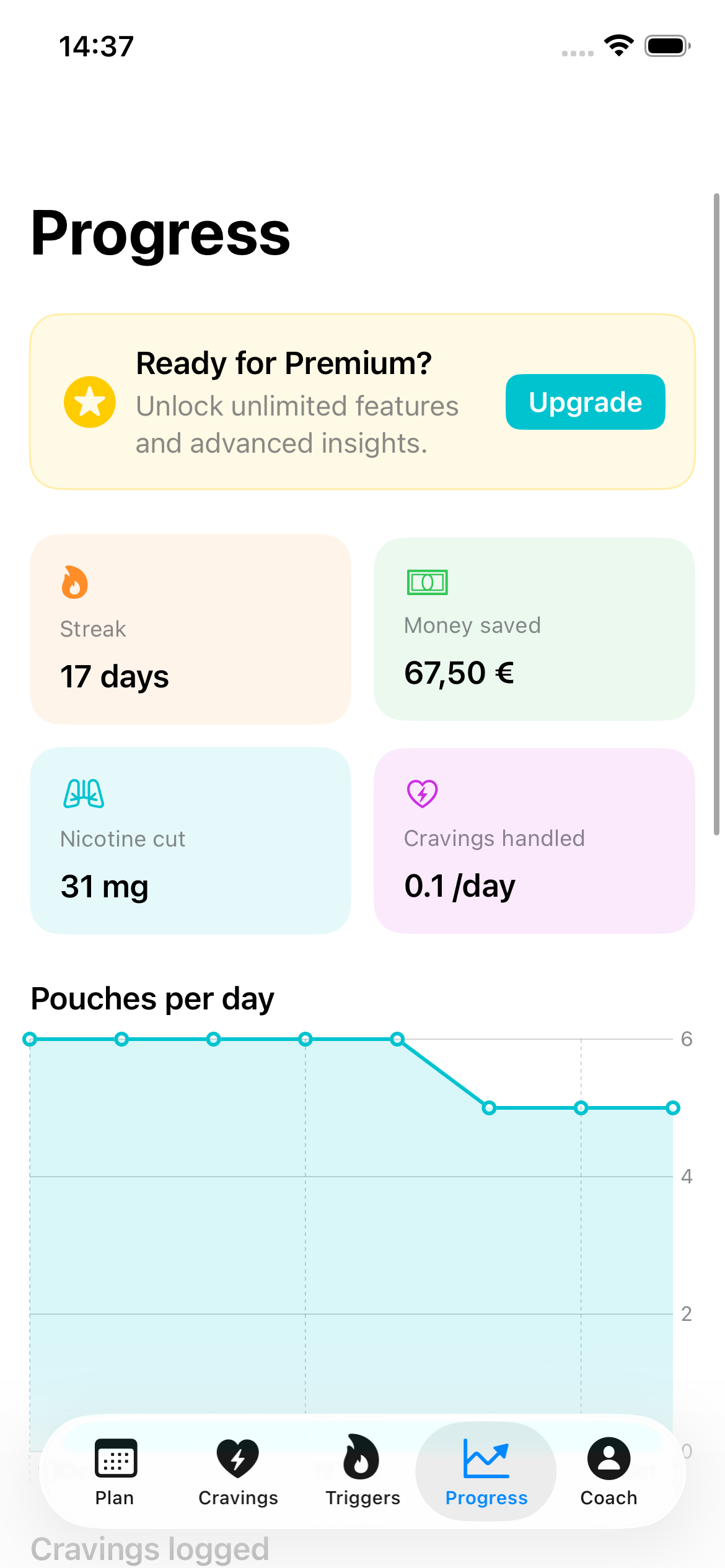
Money saved, progress markers, and streaks update automatically to keep the plan visible.
How it works
Your step-by-step path to zero pouches.
Enter current usage, target quit date, and reasons to stop. QuitNicPouches proposes a baseline plan.
Use soft taper or structured taper, then let Premium unlock adaptive taper settings and the full daily plan. For relapse prevention, read the guide to tapering off nicotine pouches without relapsing.
Log pouches, cravings, triggers, and wins each day so your next review is based on real patterns.
When you choose your final step to zero, prepare a support plan and review general withdrawal guidance.[4]
App workflow
Use the built-in planning and tracking tools instead of treating tapering as a guessing exercise.
Enter brand, strength, daily amount, cost, risk moments, and motivation so the app starts from your actual routine.
Use daily targets, scheduled slots, challenges, and trigger focus when the full plan is unlocked.
Use quick logs, check-ins, Craving-SOS, and trigger patterns to decide what needs protecting next.
FAQ
There is no validated universal duration for a nicotine-pouch taper. Choose a pace you can review, and hold a level longer if cravings or other symptoms make the next cut unsafe or unclear.
Log the extra pouches, review triggers, and use slip recovery or Craving-SOS to choose the next useful step.
Do not assume nicotine replacement therapy is right for a nicotine-pouch taper. Ask a clinician or quitline before combining it with pouches, especially if you are pregnant, have a medical condition, or take medication.[3]
Use the withdrawal timeline for general context after the final pouch. Timing and symptoms vary, so seek professional help if symptoms are severe, persistent, or concerning.
These references support the general nicotine-cessation context on this page. Nicotine-pouch-specific evidence remains limited, so the links do not establish a guaranteed outcome or a personal treatment plan.
QuitNicPouches handles the math, reminders, and motivation—so you can focus on living nicotine-free.
Launch your taper📱 Scan to Download

Scan with your phone camera to download QuitNicPouches
Social proof
Why Tapering Can Help
Gradual reduction gives you a concrete structure for lowering intake and monitoring symptoms.
Clear weekly targets
Personalised limits make each reduction easier to understand before the week starts.
Lower-friction adjustments
Gradual changes can make symptoms easier to track and discuss with a clinician if needed.
Savings visibility
Money-saved tracking adds another concrete signal of progress.